


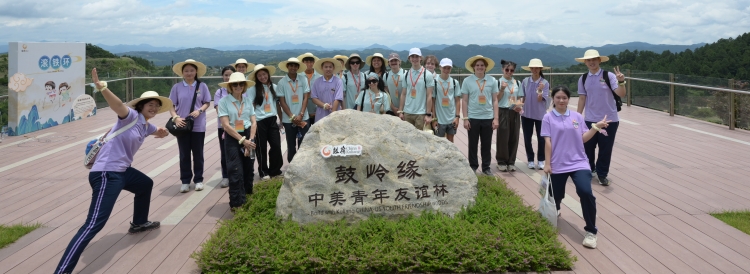
More than 100 young people from 10 U.S. universities visited China from Sept 1 to 7 as part of the Future Makers 2026 China-U.S. Youth Tour for a Shared Asia-Pacific Future. The visiting students took part in cultural visits, technology experiences, and exchanges with Chinese youth in Shandong and Beijing.

U.S. youth interact with robots during their visit to Beijing. [Photo/chinanews.com.cn]
Co-hosted by the Beijing NGO Network for International Exchanges and the Ng Teng Fong Charitable Foundation, the program brought together students from universities including Harvard University, Columbia University and the University of Chicago.
During the seven-day visit, the U.S. students attended the Asia-Pacific Civil Society Conference and visited cultural landmarks including the Temple of Confucius, the Temple of Heaven and the Great Wall. They also experienced China's high-speed rail and technological development through a visit to a Xiaomi factory, and met with students from Qufu Normal University and Tsinghua University.
On Sept 6, the U.S. and Chinese students planted the "Youth Partnership Grove" together at Yanqi Lake in Beijing, marking a shared moment of friendship and exchange.
At a sharing session, the U.S. participants spoke about the similarities they discovered with their Chinese peers, from interests in popular culture to academic pressures and hopes for the future. They said the face-to-face exchanges gave them a deeper understanding of each other and helped dispel preconceived ideas and misunderstandings.
The participants said they hoped to share their experiences with people in the U.S. and contribute to greater understanding and friendship between young people of the two countries.
At the closing ceremony, Cui Shuqiang, vice chairman of the Beijing Municipal Committee of the Chinese People's Political Consultative Conference and president of the Beijing NGO Network for International Exchanges, encouraged the young participants to explore different civilizations, carry forward people-to-people friendship and contribute to the future of the Asia-Pacific region.


